There’s a certain stillness that goes into making handwork sarees. No machine sets the rhythm — a weaver or embroiderer decides where every thread lands, what motif gets placed where, and how the border connects to the body. That level of decision-making produces something you can feel the moment you hold it. The weight sits differently. The surface has texture you didn’t expect. At Kamal Vasthralaya, we’ve seen customers pick up a handwork saree, go quiet for a second, and then say, “this is different.” That reaction is what 40 years of sourcing genuine craft looks like.
This blog sits within our larger hub on handloom sarees — if you haven’t read that yet, it’s the anchor piece that covers the full world of weave traditions. We’ve also written in depth about handloom silk sarees, which pairs naturally with the handwork story. Here, the focus is on the needlework, the golden borders, and the hand work saree online shopping decisions that matter.
What Makes Handwork Sarees Different From Everything Else
The simplest way to say it: in handwork sarees, the decorative elements are added by hand after the weave is complete. That includes embroidery, thread work, mirror work, stonework, and of course the golden zari embellishments that define South Indian festive wear. The weave itself may be machine-made in some cases, but the surface craft is entirely manual — and that’s what gives handwork sarees their depth.
Compare this to a printed or digitally embroidered saree. On a screen-printed version, the design is applied in seconds. On a handwork saree, the same square inch of embroidery might take thirty minutes — not an exaggeration. A heavily worked bridal piece can take several weeks from start to finish. That’s why handwork sarees carry a price point that reflects real labour, not just material cost.
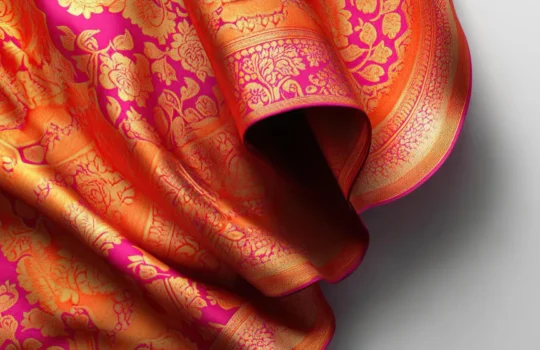
When you’re looking for golden handloom sarees specifically, the handwork angle is almost always part of the story. Real zari borders and motifs on golden handloom sarees don’t come from a printer. They come from a craftsperson who understands tension, spacing, and pattern repetition well enough to reproduce it consistently, row after row.
Golden Handloom Sarees: Where Zari Craft Meets Traditional Weave
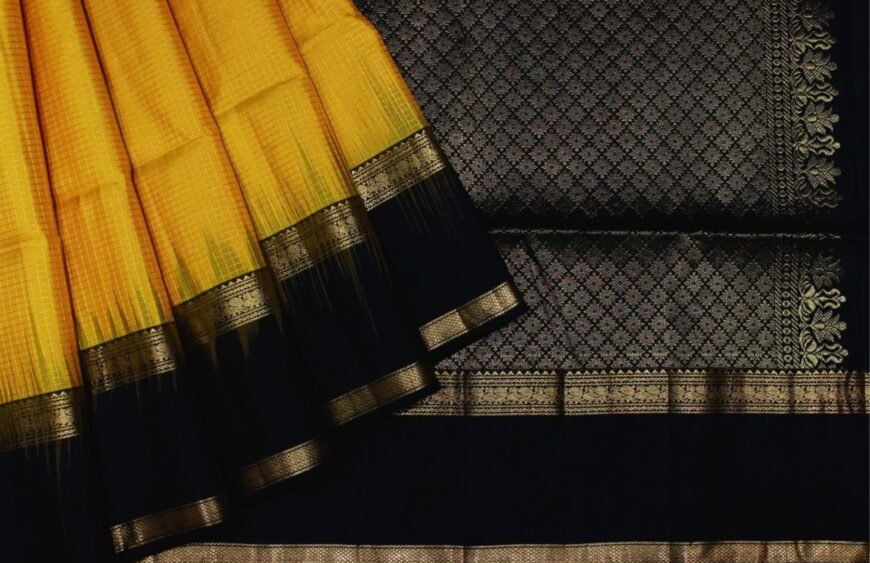
The phrase “golden handloom sarees” covers more ground than most people assume. It’s not just about sarees that are golden in colour — it refers to weaves where real zari (metallic thread with a gold coating) forms a central part of the design. That could mean a bold gold border on a deep jewel-toned saree, an all-over zari motif worked into the body, or a pallu that transitions from plain silk into a heavily gold-worked section.
Among golden handloom sarees, Kanchipuram remains the most recognised name. But other weave traditions — Pochampally’s ikat-influenced patterns, Banarasi brocades — use gold zari in ways that feel distinctly different from the South Indian temple vocabulary. Each is a legitimate version of golden handloom sarees, and the right choice depends on your occasion and the motif style you prefer.
Kamal Vasthralaya sources golden handloom sarees directly from weaving clusters, so the zari you’re looking at is the real thing — not a metallic print passed off as thread work. Browse our Kanchivaram collection to see the zari craft up close.
5 Things Worth Knowing Before You Buy Handwork Sarees
Shopping well for handwork sarees means knowing what you’re actually evaluating. There’s a real difference between handwork sarees that hold up over years and pieces that look beautiful on the shelf but don’t survive regular wear. Five things separate a confident buy from a regretted one.
1. Thread count in embroidery tells you about density. Denser threadwork means more labour, more material, and a heavier saree — not always better, just different. For daily wear and festive use, a lighter embroidery density often works better than a heavily packed piece.
2. Zari quality varies massively. Genuine gold zari uses a real metallic coating that doesn’t tarnish easily. Artificial zari can look bright initially but turns dull within a year. Ask explicitly whether the zari is pure or artificial when purchasing — especially for golden handloom sarees with prominent border work.
3. The base fabric matters as much as the work on top. Embroidery done on a flimsy base saree won’t hold well over time. A stable weave as the foundation — silk, cotton, or silk-cotton — keeps the needle work intact through wears and washes.
4. Colour fastness in thread work is a real concern. Coloured thread embroidery can bleed if the saree is washed without care. Always dry clean embroidered pieces for the first two to three washes, and test coloured thread sections before wet washing at home.
5. Proportion matters — embroidery shouldn’t compete with the weave. The best handwork sarees balance needle craft with fabric character. If the entire body is covered in heavy work, the weave disappears, and you’re wearing embroidery on a surface rather than a saree with identity.
Hand Work Saree Online Shopping: What to Check Before You Click Buy
The shift toward hand work saree online shopping has been real and significant over the last few years. More women are comfortable buying traditional sarees online — and honestly, with the right checks in place, it works well. But there are specific things you need to verify that you’d assess naturally in a physical store.
First: always look for multiple photographs, including close-up shots of the embroidery and weave. A reputable platform doing hand work saree online shopping will show you the surface texture, the border detail, and the pallu separately — not just one styled shot of the full saree draped. If the listing only has one image, that’s a red flag.
Second: check the return and exchange policy before you commit to hand work saree online shopping. Handwork pieces are rarely discounted, so make sure the platform you’re buying from has a clear policy if the colour or texture doesn’t match the screen. At Kamal Vasthralaya, our online shop lists detailed product descriptions and actual close-up weave photos so you know what you’re getting. And if you’re unsure, our contact page is always open for specific queries before you order.
Third: delivery timelines matter for hand work saree online shopping around festivals and weddings. Order at least two to three weeks in advance for embroidered or heavily worked pieces — some styles are made to order, and rushed dispatch can mean compromised packaging for delicate threadwork.
The Craft Mark or Handloom Mark certification is also worth checking when you shop online. The Office of the Development Commissioner for Handlooms maintains a registry of certified handloom products — a small detail that makes a real difference in confirming your purchase is genuine.
Frequently Asked Questions
What’s the best way to store a saree with heavy embroidery?
Roll it instead of folding wherever possible — rolling prevents sharp creases from forming at fold lines, which can stress embroidered thread sections over time. Wrap in a soft muslin cloth for storage.
Does handwork add significantly to the price of a saree?
Yes, and it should. Each hour of needle craft adds to the final cost in a way that reflects real labour. A piece with dense embroidery or extensive zari work takes days or weeks to complete — that value is legitimate and worth understanding before comparing prices.
How do I know if the embroidery on a saree is hand-done vs machine-done?
Hand embroidery has slight irregularities in stitch size and spacing — you’ll see small variations if you look closely at a repeated motif. Machine embroidery is perfectly uniform throughout, with no natural variation in thread tension or stitch depth.
Is it safe to steam-iron a saree with thread work or mirror work?
Turn it inside out and use a cloth barrier between the iron and the embroidery. Direct heat on thread work can flatten delicate stitching or warp mirror attachments. Medium heat, brief contact, cloth barrier — that’s the safe approach.
Are embroidered sarees appropriate for casual or everyday wear?
Lighter embroidery styles — small motifs, subtle border work — absolutely work for everyday and semi-formal wear. Reserve heavy zari and dense thread work for weddings and major festivals where the occasion matches the effort of the craft.
Conclusion
Handwork sarees sit at the intersection of two craft traditions — the loom and the needle. When both are done well, the result holds meaning beyond fashion. You’re not buying a saree. You’re buying someone’s time, their skill built over years, and a piece of textile heritage that has no machine equivalent.
At Kamal Vasthralaya, we carry handwork sarees sourced with the same care applied to every weave for over four decades. Whether you’re drawn to golden handloom sarees for a wedding, exploring hand work saree online shopping from home, or browsing for golden handloom sarees as a gift — we’re here for that conversation.
Visit our full saree collection or come into our R.S. Puram showroom and let the fabric speak. For the full context on weave traditions, our guide on handloom sarees is the place to begin.